Project 2026 Edition
The New Paseo Marítimo of Palma: from traffic corridor to a waterfront shared by a working port and its city
A project supported by: Port Authority of the Balearic Islands
Completion date: 2025
Total budget:€52 million (excluding VAT)
Main Agenda 2030 by AIVP Commitment: Goal 3 – Sustainable Mobility

To sum up
The Port of the Balearic Islands’ New Paseo Marítimo project addresses a common port-city planning challenge: a heavily car-dominated waterfront road that creates a barrier between the port and the city, leaving little space for pedestrians, cyclists or leisure activities. A situation typical of many port cities, it has been transformed through a major redesign that significantly improves the quality of the urban environment.
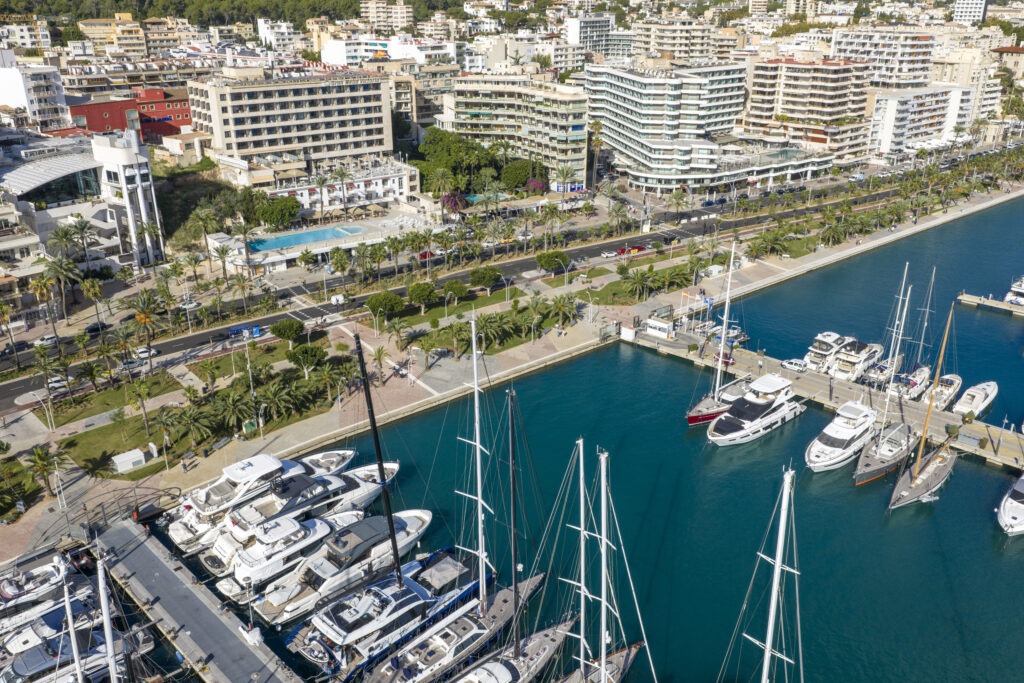
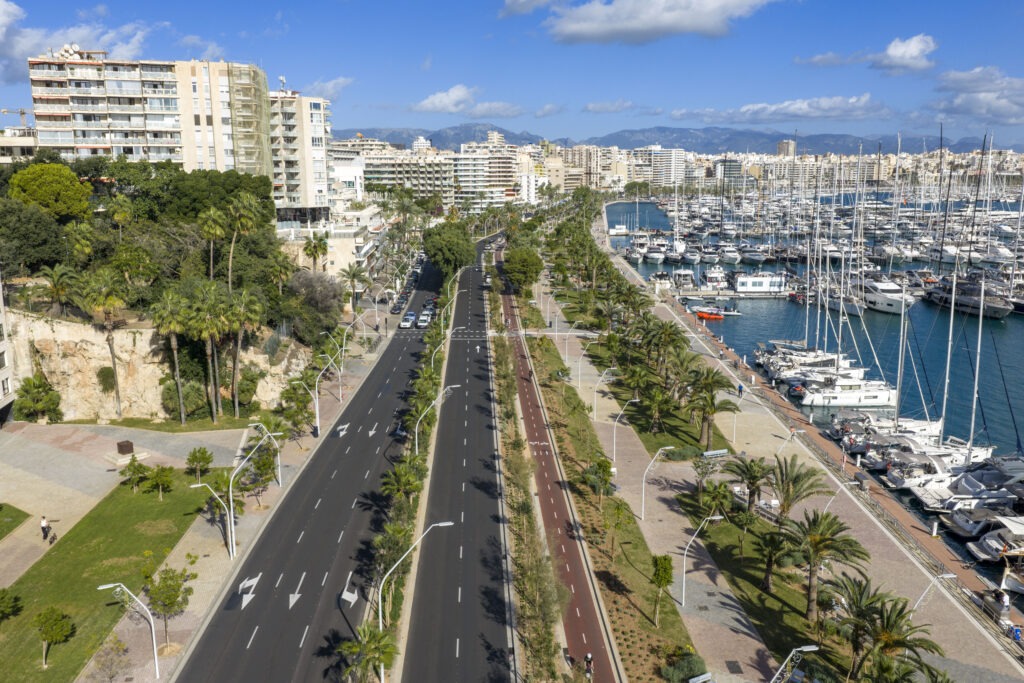
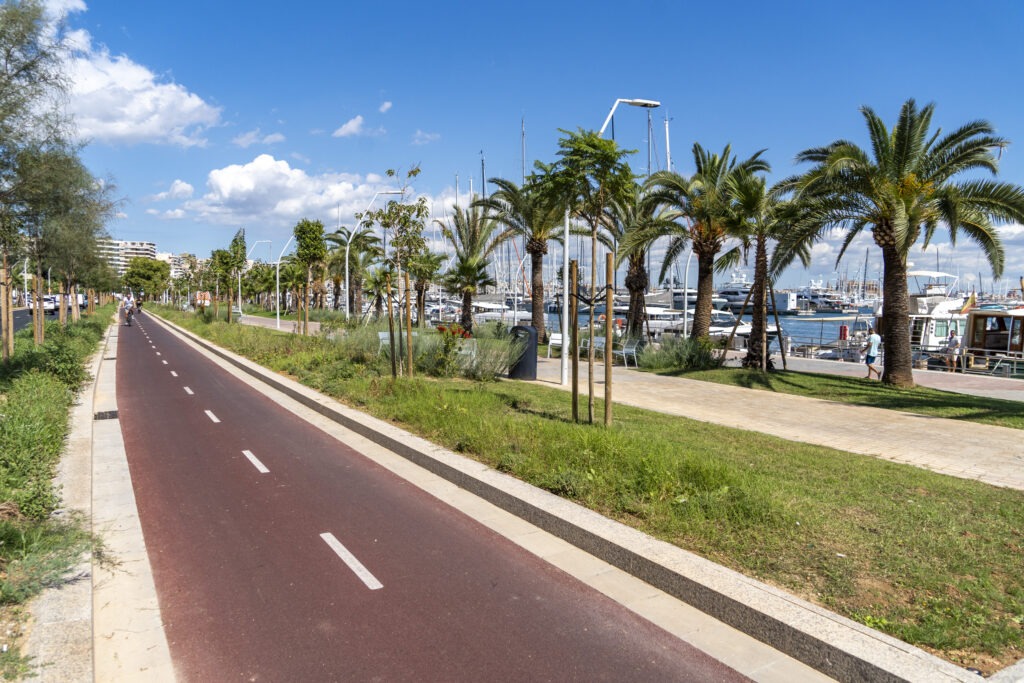
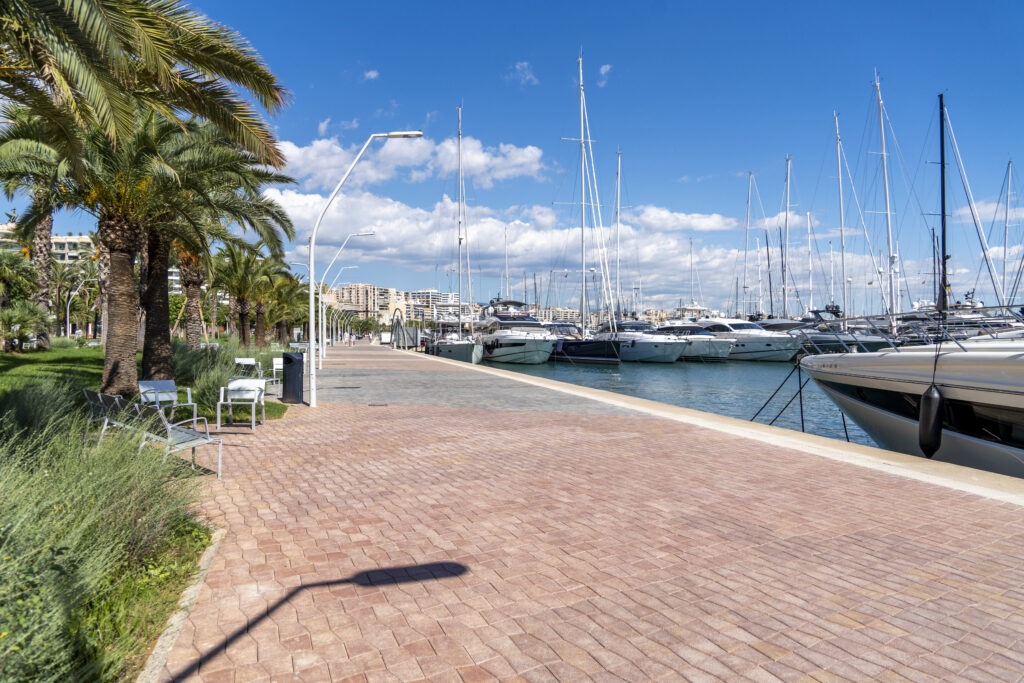
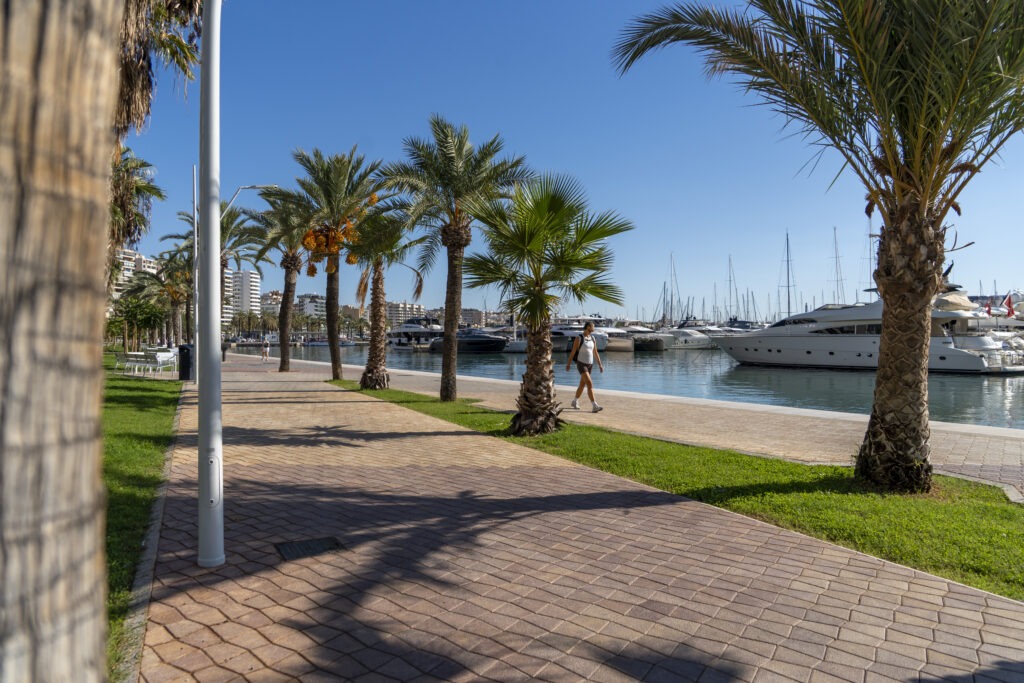
The project reconnects citizens with the waterfront as a destination. It features an urban boulevard, multi-use spaces, a landscape scheme rich in greenery, and carefully designed lighting that enhances aesthetics, comfort and functionality, while prioritizing active mobility. The project also addresses wider environmental challenges through a completely new sewage system and a comprehensive planting scheme that improves climate comfort and promotes biodiversity. Traffic has been reduced by almost half, while connections across the waterfront have been improved. The result is a network of high-quality public spaces offering safe and comfortable areas for pedestrians, cyclists, families and leisure activities. A newly opened Port Center further strengthens this transformation by helping citizens better understand and connect with port activities.
Design by:
- Basic design and the detailed design were prepared by the JAMLET–TYPSA joint venture, winner of the international public tender launched by the APB in 2018.
- Architecture and urban and landscape design: José Antonio Martínez Lapeña and Elías Torres – José Antonio Martínez Lapeña & Elías Torres Architects (JAMLET).
- Engineering and technical development: TYPSA (Técnica y Proyectos, S.A.).
Outstanding features:
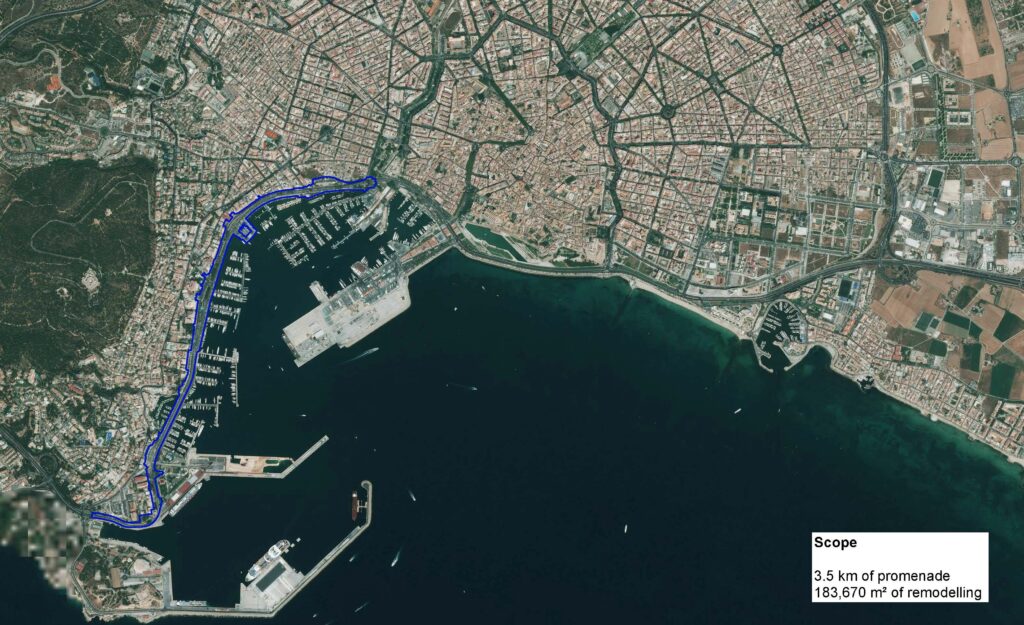
- Transformation of 169,010 m² of port areas into an accessible, vibrant and shared waterfront.
- Conversion of a road primarily dedicated to motor vehicle traffic into a public space promoting sustainable transport and recreational uses.
- Creation of 37,351 m² of green and permeable surfaces.
- Modernisation of the sewerage networks and separation of rainwater and wastewater to minimise the risks of overflow and pollution.
- Establishment of a joint monitoring committee and a mechanism for dialogue with stakeholders;
- A participatory approach involving residents, local businesses, organisations, and experts in the design and implementation of the project.
- Reuse of 95 per cent of materials from the demolition, thereby avoiding the import of 90,000 tonnes of materials onto the island.
Why was it selected as a finalist ?
The New Paseo Marítimo project demonstrates how a port authority can proactively transform the urban-port interface by shifting the balance of land use in favor of people. The project also stands out for its governance approach. The design process involved extensive engagement with local businesses and communities. The Port Authority delivered the improvements on port-owned land before transferring the redeveloped areas to the city for maintenance, establishing a practical framework for long-term cooperation.
Images of the project
About the Port Authority of the Balearic Islands
The APB is the public authority managing the Balearic Islands’ five State-owned ports of general interest — Palma, Alcúdia, Maó, Eivissa, and La Savina — on four islands. Under a landlord port model, these captive island ports receive most of the goods supplying the archipelago and sustain its connectivity. In 2025, they handled 17.5 million metric tonnes and 9.9 million passengers, nearly 25% of passenger traffic in the Spanish port system. As they occupy urban waterfronts, reconciling working ports with port–city integration takes priority: in 2025 this integration accounted for 66.3% of the APB’s material and infrastructure investment (almost €25 million).
Back to projects